
Nov 10, 2026
Three months into our acoustic rat detection trial, our recorders are picking up nearly twice as much rat activity as trail cameras. Here's what we're testing, and why it matters.
At a glance
- What: A seven-month trial (August 2026 to February 2027) in Pureora Forest testing whether acoustic recorders can reliably detect rats and how they compare to trail cameras, run with Neil Henderson and Kaipātiki Project.
- Setup: 15 sites, each with at least one acoustic recorder and a trail camera.
- Early result: In the first 60 days, our recorders logged 622 rat events against 325 on camera, nearly twice as many. Every detection was checked by hand.
- Next: Listening for the first rats as they return after knockdown, and running our rat detection AI on-device for real-time alerts.
Why it matters
On New Zealand's predator-free islands, a single missed rat can undo years of work. Ulva Island, off Rakiura, is a recent example: rats got past the island's traps in 2021 and 2022 and began breeding, and DOC needed a full eradication.
Finding the first rat is the hard part. Monitoring remote sites means costly boat or helicopter trips, and most tools only work if a rat visits a trap, tunnel or camera. But rats communicate, mostly in ultrasound, and a recorder just has to listen.
How it started
We didn't set out to find rats. At Alato, we make the AR5 acoustic recorder, the successor to DOC's AR4. Between the two devices there are 1000s in the field, recording wildlife around New Zealand. Alato Lab, our bat call analysis platform has processed over 3 million recordings, and survey after survey, rat calls kept turning up in our bat data.
At the Pestival event in Muriwai earlier this year, we got talking with Neil Henderson. In 2025, Neil had put four recorders into Pureora Forest for a month and picked up 6,700 rat calls. He wanted to go bigger to understand more about them acoustically. We were pretty interested to see how we could help, so we packed up the gear and headed down State Highway 1 to Pureora.
The trial
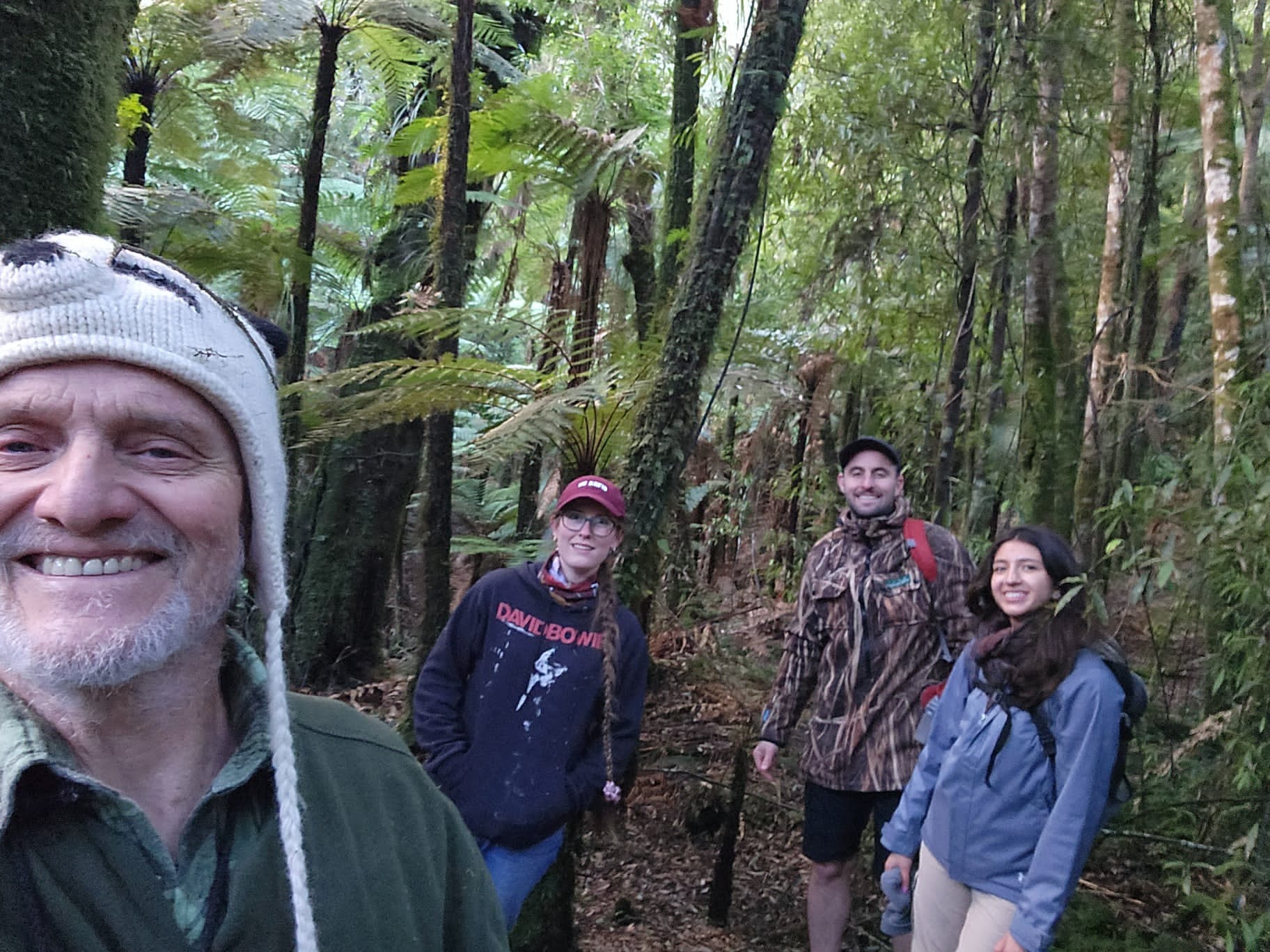
Together with Neil and Kaipātiki Project, we've set up 15 recording sites, 100 metres apart, along two trap lines in kōkako country. Each site has at least one acoustic recorder (an AR5, with our new SoundScout at some sites), a trail camera and a tracking tunnel. That gives us two independent checks on every acoustic detection.
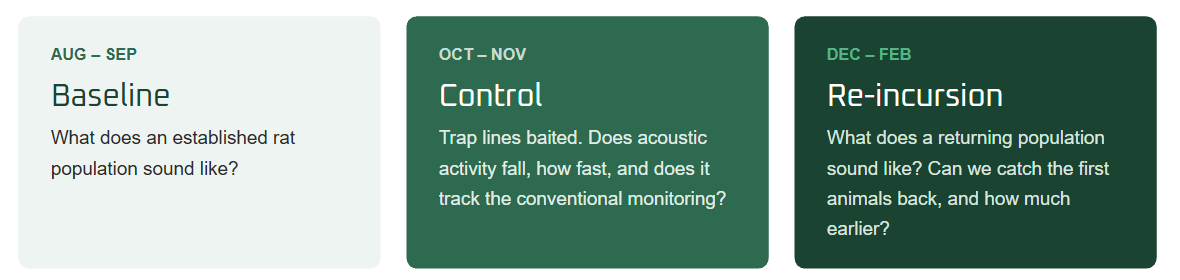
The trial runs for seven months, from August 2026 to February 2027, in three phases. We record an established rat population for two months, bait the trap lines to bring numbers down over the next two, then spend the final three listening as rats move back in.
We collect and analyse the data every month, so our model improves as the study runs, not after it.
We want to answer three questions:
- Can acoustics reliably detect rats?
- Are they more effective than trail cameras?
- What do rats sound like at different population levels, and does a single rat chatter?
Early results
In the first 60 days, covering the baseline phase:
- 325 rat events on camera
- 622 rat events on our recorders
- 4,800+ individual rat calls, from 77,000 recordings
To compare fairly, we group calls into 5-minute windows, so a rat calling repeatedly counts once, much like a camera logging a visit. On that basis, we're hearing nearly twice as much rat activity as we're seeing.
We checked every rat detection by hand. These are early numbers from an established rat population. The bigger test comes later in the trial, when there are only a few rats to pick up. We'll share the rest of our monitoring data, and site-by-site detection rates, in a later update.
Two other things stand out. Rats tend to go quieter when they're on camera, which might suggest the two methods catch different behaviour and could work well together.
We're also picking up lots of bat activity, including thousands of social calls. How rats and bats interact is something we'd like to explore further, possibly in 2027.
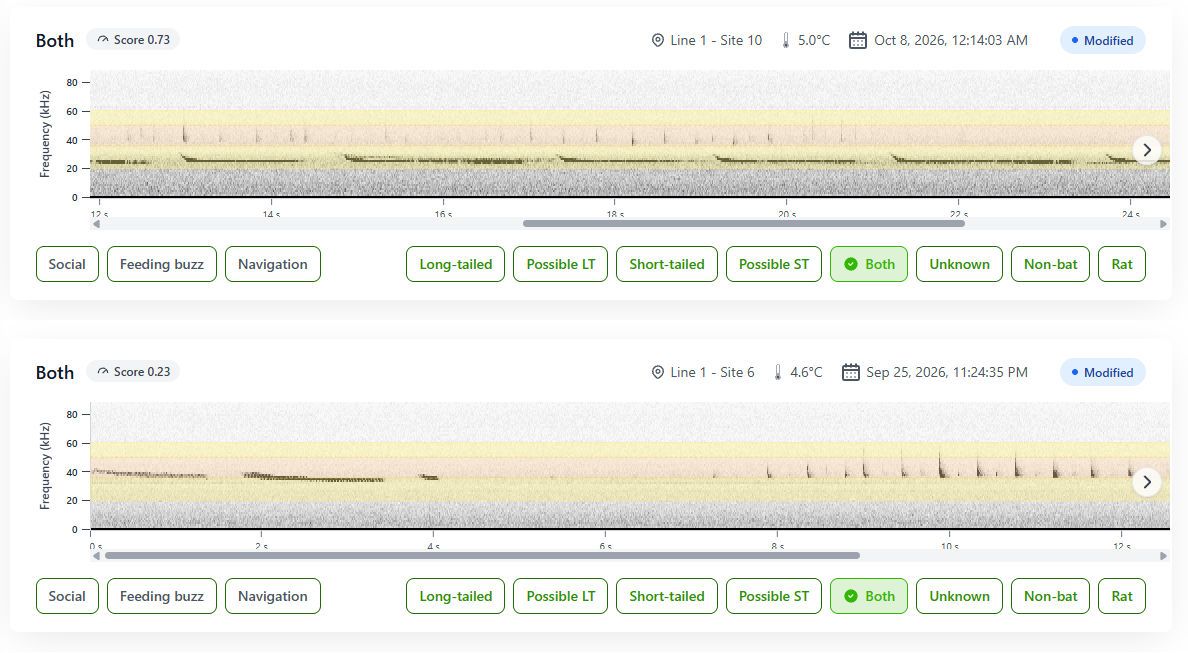
We've used this first batch of data to build version 1 of our rat detection AI. It's already running in Alato Lab, tagging rat calls automatically. It follows the same path as our bat model, which has identified 250,000 calls from 3 million recordings and now runs on-device.
What's next
We're now in the control phase, with the trap lines baited we should see rat activity slow down. Then comes the part that matters most, can we hear the first rats as they return? Does a single rat make noise or do they need a friend, we don’t know.
In the meantime we will continue to work on our rat detection model improving accuracy and testing it on the SoundScout for real time detection. Working with some research partners we are looking into differentiating between our three rat species Ship Rat (Rattus rattus), Norway Rat (Rattus norvegicus) and Kiore(Rattus exulans) little it currently know about the differences between their vocalisations so watch this space as we go deep into the rodent world to find out more about them.
Our goal is New Zealand's first acoustic early-warning pest system for remote sites. Right now, we collect trial data monthly. Our new device the SoundScout removes that wait: it runs our AI detection models on the device itself and flags a call in around 55 milliseconds.
We've already been trialling real-time detection with bats near South Waikato and have Bittern trials planned before Christmas, with alerts landing in Alato Lab as they happen. For rats, only the model changes on the device.
And with more than 1,500 AR5s already recording ultrasound across New Zealand, a reliable rat model could turn existing surveys into a nationwide picture of rat activity.
Keep an eye out for our next update and some exciting news about the launch of the SoundScout in the coming weeks.
As always if you have any comments, questions or know a lot about rats then get in touch Nick@alato.co.nz


